



15 July, 2026
Why Business Has Become the Degree for an Uncertain World

.jpg?h=249&iar=0&w=374&rev=2cdc7327560f4c80b14a3bfd2be23cfa&hash=7E4E151DDFCBB0F5DCCB44342C224106)
In 2010, a final-year Business student might have written a dissertation on Blockbuster's competitive advantage. By 2014, Blockbuster was gone. Not because it made a bad decision, but because it made yesterday's good decisions in tomorrow's market. That gap is exactly what a business degree now trains students to read.
The world isn't just changing. It's changing in ways that punish people who learned static answers. New competitors disrupt entire categories overnight. Supply chains get redrawn by tariffs and trade disputes. Consumer habits shift faster than five-year strategies can account for. For ambitious students, this raises a real question: how do you prepare for a career that doesn't we don't have a clear understanding of what it looks like yet?
Business has become one of the most convincing answers, not because it offers stability, but because it teaches you to operate without it.
It's a discipline of "why," not just "how."
A decade ago, Business case studies were standard: how Apple builds loyalty, how a supermarket optimises its supply chain. Today, the case studies themselves are the lesson in how fast the ground can shift. An app can turn an entire taxi industry upside down in a handful of years. A single product launch can make a category of physical media irrelevant almost overnight. The best Business education now teaches students to interrogate the mechanism behind that kind of disruption: not just what changed, but why the incumbents didn't see it coming, and why the underlying advantage evaporated so quickly. Business and management studies build a versatile skill set covering strategic planning, leadership and problem-solving, and that skill set only holds up if it's built to make sense of disruption as the norm, not the exception.
That demand for adaptable thinkers is reflected globally. Times Higher Education's 2025 Business and Economics ranking includes 990 institutions from 85 countries and territories, a scale that signals how seriously the subject is now taken, far beyond its old reputation as a "safe" choice.
Here's the part that surprises most students: among Fortune 500 CEOs, engineering degrees are actually more common than business degrees outright. The lesson isn't that the degree title matters. It's that the way of thinking, interrogating a system, finding where a model breaks, asking what assumption a result depends on, is what shows up again and again in the people who end up running things.
What this means for how we teach Business
Teaching to the exam produces a student who can define "competitive advantage." Teaching for curiosity produces a student who asks why two companies in the same industry, with similar products, end up with completely different margins, and goes looking for the answer unprompted. That instinct has to be built deliberately. We do it three ways:
- Defend the side you don't believe. Most students can explain why a merger creates value. Fewer can build the strongest case for why it destroys it instead. Constructing the argument you disagree with is the fastest way to find the gaps in the one you do.
- Find where the model breaks. It's easy to learn that lower prices win market share. It's harder to spot when that's false, like a luxury brand where a price cut signals desperation and drives customers away. We push students toward the exception, not just the rule.
- Work backward from outcomes. Anyone can explain after the fact why a launch failed. Fewer can say, from what was known beforehand, what the warning sign should have been. That's the skill with no textbook chapter, which is every real situation a graduate will face.
Blockbuster's executives could have answered every question on a standard Business exam about subscription models, customer retention, and fixed costs. What they couldn't do was apply that knowledge to their own collapsing business in time to act on it. That's the actual finish line for a Business education. Not knowing the theory but knowing it well enough to see your own blind spot before the market finds it for you.
Related news
News image ![Why Psychology Is One of the Most Important Subjects for the Future | OIC Brighton - Why Psychology Is One of the Most Important Subjects for the Future]() Blog
Blog
 Blog
Blog Why Psychology Is One of the Most Important Subjects for the Future
We explore why Psychology remains one of the most valuable subjects for students, developing critical thinking, scientific literacy and a deeper understanding of human behaviour in a rapidly changing world.
News image ![Oxford International College Brighton Celebrates Outstanding GCSE Results - Oxford International College Brighton GCSE Results 2026]() News
News
 News
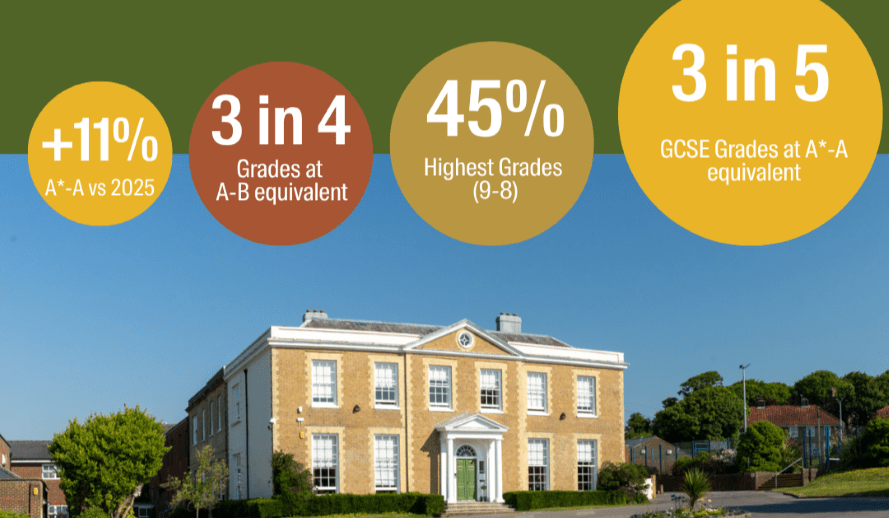
News Oxford International College Brighton Celebrates Outstanding GCSE Results 2026
Students at Oxford International College Brighton are celebrating an exceptional set of GCSE results, with 62% of all grades awarded at A*/A equivalent level and three quarters of grades awarded at the equivalent of A*-B.
News image Blog
Starting Boarding School Near Brighton | A Practical Guide for Families
Thinking about boarding school near Brighton? This guide covers the Ovingdean campus, what to expect, a before-you-arrive checklist and what to pack for life on the Sussex coast.
News image ![OIC Brighton Students Secure Places at Cambridge and Leading Global Universities Following Outstanding A Level Success | OIC Brighton - OIC Brighton Students Secure Places at Cambridge and Leading Global Universities]() Blog
Blog
 Blog
Blog OIC Brighton Students Secure Places at Cambridge and Leading Global Universities Following Outstanding A-Level Success
With one in three students achieving three or more A/A* grades and destinations spanning the UK, Europe, North America and Asia, the Class of 2026 has demonstrated outstanding academic achievement and ambitious futures.