

.jpg?h=249&iar=0&w=374&rev=2cdc7327560f4c80b14a3bfd2be23cfa&hash=7E4E151DDFCBB0F5DCCB44342C224106)
We use cookies to improve your online experiences. To learn more and choose your cookies options, please refer to our cookie policy.

11 June, 2026
Rocketry, Astrophysics and Going Beyond: Why Future-Ready STEM Learning Matters at OIC Brighton
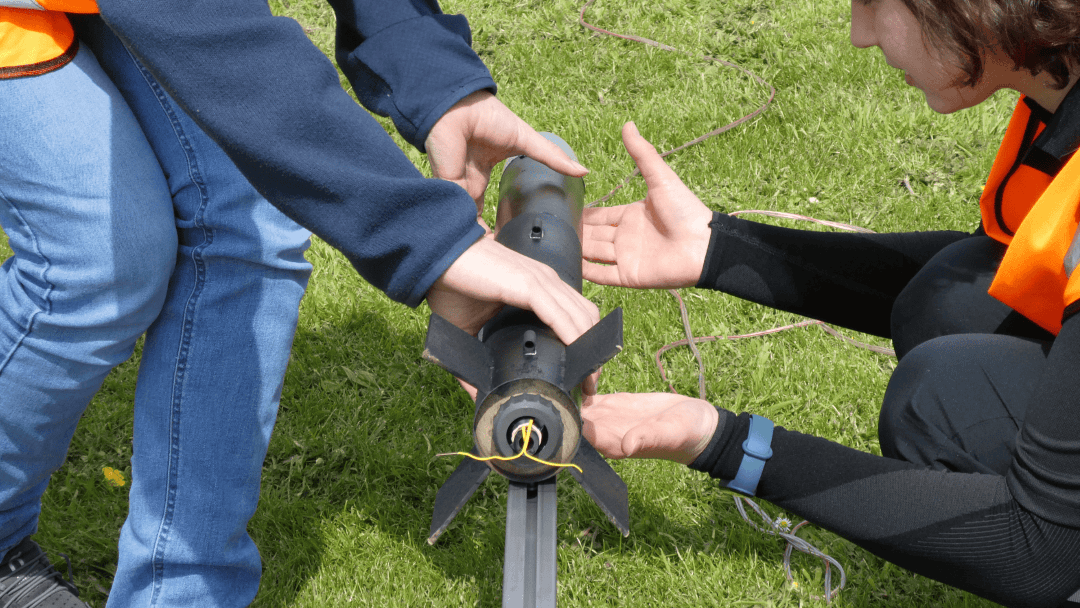
At OIC Brighton, ambitious learning does not stop at the exam specification. In Episode 2 of the OIC Brighton Podcast, “Rocketry, Astrophysics & Going Beyond”, Gary Newport explores how rocketry, astrophysics and Computer Science can help students think more deeply, solve complex problems and connect classroom learning with the wider universe.
For students preparing for competitive university pathways, this kind of concept-driven STEM education is increasingly important. It encourages curiosity, independence and intellectual confidence, while helping students see how subjects such as physics, mathematics, engineering and computing work together in real-world contexts.
Why Rocketry Helps Students Apply Science in the Real World
Rocketry is a powerful way to bring STEM learning to life.
When students explore rocketry, they are not simply learning isolated facts. They are applying physics, mathematics, engineering principles and computational thinking to a practical challenge. They need to consider forces, motion, materials, design, data, accuracy and safety. Every decision matters.
This helps students understand that science is not only something to memorise. It is something to test, question, refine and improve.
For ambitious students, especially those interested in engineering, physics, Computer Science or aerospace-related fields, rocketry provides a meaningful way to develop problem-solving skills. It also builds resilience, because practical science often involves trial, error and improvement.
Astrophysics and the Power of Big Questions
Astrophysics encourages students to ask some of the biggest questions in science.
- How did the universe begin?
- How do stars form and evolve?
- What can data tell us about distant galaxies, planets and cosmic events?
These questions inspire students to think beyond the classroom while developing rigorous analytical skills. Astrophysics combines mathematics, physics, observation, modelling and interpretation, making it an excellent field for students who enjoy challenge and discovery.
In the podcast, the discussion highlights how space education can encourage deeper thinking and genuine scientific curiosity. For OIC Brighton students, this aligns closely with the college’s focus on academic ambition and future-ready learning.
Computer Science as a Foundation for Future Pathways
Computer Science plays a central role in modern STEM education.
From data analysis and simulation to artificial intelligence and computational modelling, many of today’s most exciting scientific developments depend on strong digital and analytical skills. Students who understand programming, algorithms and computational thinking are better prepared to engage with advanced research and emerging industries.
In fields such as engineering, physics, medicine, finance, robotics and AI, the ability to analyse data and design logical solutions is increasingly valuable.
By connecting Computer Science with rocketry and astrophysics, students can see how coding and computation support real scientific investigation. This helps them understand the relevance of their learning and builds confidence for future university study.
Learning Beyond the Exam Specification
At OIC Brighton, students are encouraged to go beyond academic excellence.
This means developing the ability to think independently, explore advanced concepts and apply knowledge with purpose. Rocketry and astrophysics are excellent examples of this approach because they encourage students to connect ideas across subjects.
A student exploring rocketry might draw on:
- Physics, to understand motion and forces
- Mathematics, to calculate trajectories and performance
- Computer Science, to analyse data or model outcomes
- Engineering, to consider design and materials
- Communication skills, to explain findings clearly
This kind of cross-curricular learning helps students become more confident, capable and adaptable.
Preparing Students for Competitive University Courses
For students aiming for competitive university pathways in science, technology, engineering, mathematics, medicine or related fields, subject passion matters.
Universities are looking for students who can show more than strong grades. They want to see curiosity, initiative, independent thinking and evidence of genuine engagement with a subject.
Experiences linked to rocketry, astrophysics and research-focused STEM learning give students opportunities to develop and demonstrate these qualities. They help students speak more confidently about their interests in applications, interviews and academic discussions.
This is particularly valuable for students considering courses such as:
- Physics
- Engineering
- Computer Science
- Mathematics
- Aerospace Engineering
- Artificial Intelligence
- Data Science
- Medicine and biomedical sciences
Find out how Mara in Year 13 used her experience of Rocketry Club and Nord Anglia's unique collaborations with (MIT) to support her university applications.
Inspiring Curiosity, Confidence and Ambition
The OIC Brighton Podcast episode captures something central to the college’s approach: ambitious students need opportunities to be inspired.
When students are introduced to advanced ideas in a supportive and engaging way, they begin to see what is possible. They become more willing to ask questions, explore unfamiliar concepts and challenge themselves academically.
Rocketry and astrophysics can make learning feel exciting, purposeful and connected to the future. They show students that STEM is not just about exams. It is about discovery, innovation and understanding the world, and universe, around us.
Watch the OIC Brighton Podcast
Episode 2 of the OIC Brighton Podcast, “Rocketry, Astrophysics & Going Beyond”, explores the value of space education, practical STEM learning and the importance of encouraging students to think beyond the classroom.
For families considering OIC Brighton, the episode offers an insight into how the college develops more than academic excellence. It shows how students are encouraged to think boldly, build confidence and prepare for future pathways in science, technology and beyond.
Related news
News image ![Why Psychology Is One of the Most Important Subjects for the Future | OIC Brighton - Why Psychology Is One of the Most Important Subjects for the Future]() Blog
Blog
 Blog
Blog Why Psychology Is One of the Most Important Subjects for the Future
We explore why Psychology remains one of the most valuable subjects for students, developing critical thinking, scientific literacy and a deeper understanding of human behaviour in a rapidly changing world.
News image ![Oxford International College Brighton Celebrates Outstanding GCSE Results - Oxford International College Brighton GCSE Results 2026]() News
News
 News
News Oxford International College Brighton Celebrates Outstanding GCSE Results 2026
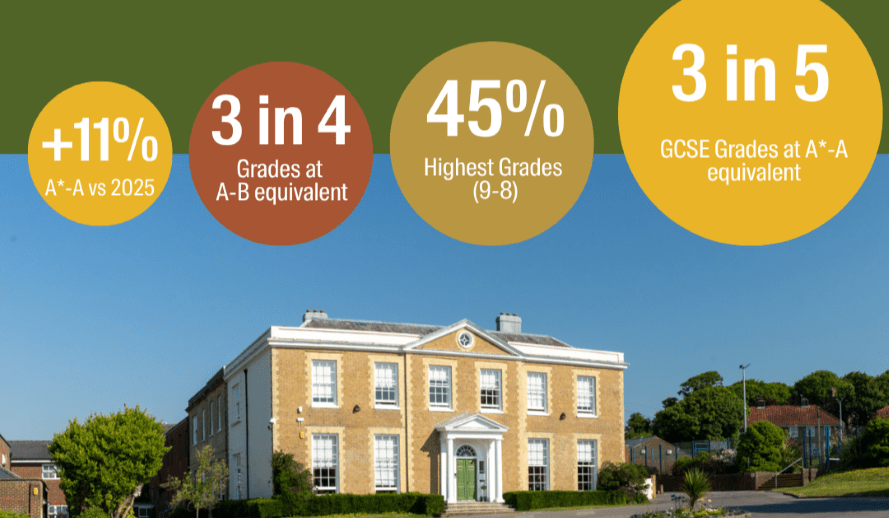
Students at Oxford International College Brighton are celebrating an exceptional set of GCSE results, with 62% of all grades awarded at A*/A equivalent level and three quarters of grades awarded at the equivalent of A*-B.
News image Blog
Starting Boarding School Near Brighton | A Practical Guide for Families
Thinking about boarding school near Brighton? This guide covers the Ovingdean campus, what to expect, a before-you-arrive checklist and what to pack for life on the Sussex coast.
News image ![OIC Brighton Students Secure Places at Cambridge and Leading Global Universities Following Outstanding A Level Success | OIC Brighton - OIC Brighton Students Secure Places at Cambridge and Leading Global Universities]() Blog
Blog
 Blog
Blog OIC Brighton Students Secure Places at Cambridge and Leading Global Universities Following Outstanding A-Level Success
With one in three students achieving three or more A/A* grades and destinations spanning the UK, Europe, North America and Asia, the Class of 2026 has demonstrated outstanding academic achievement and ambitious futures.