

.jpg?h=249&iar=0&w=374&rev=2cdc7327560f4c80b14a3bfd2be23cfa&hash=7E4E151DDFCBB0F5DCCB44342C224106)
We use cookies to improve your online experiences. To learn more and choose your cookies options, please refer to our cookie policy.

09 June, 2026
Fieldwork at Wakehurst Gardens: A Level Biology Students Explore Ecology in Action
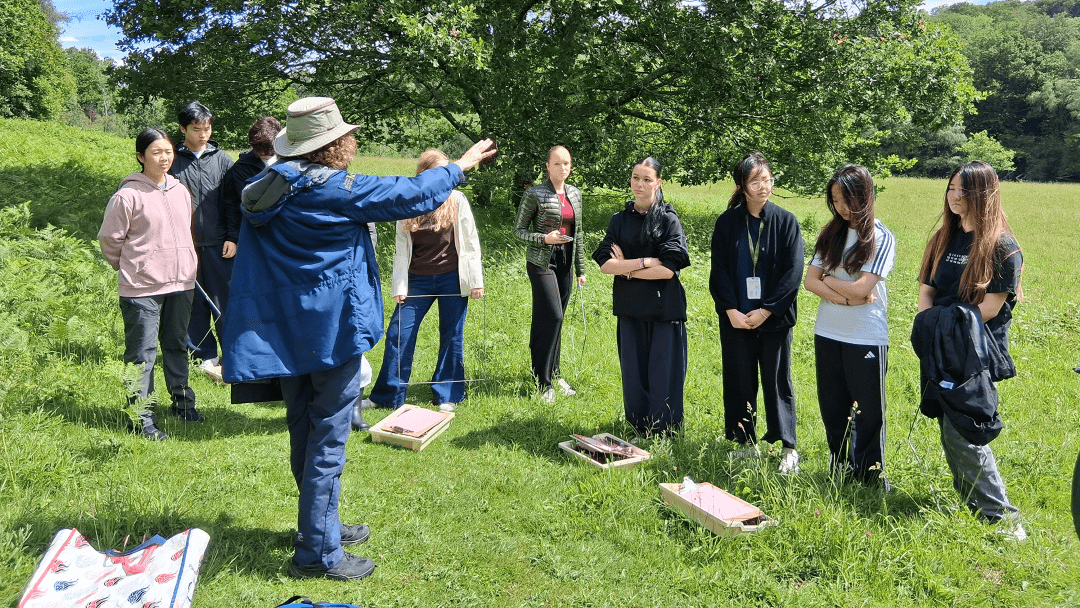
Our Year 12 Biology students recently took their learning beyond the classroom with an inspiring field trip to Wakehurst Gardens, a unique site owned by the National Trust and managed by the Royal Botanic Gardens, Kew.
Home to the Millennium Seed Bank, the world’s largest collection of seeds from wild plant species, Wakehurst provided the perfect setting for students to explore ecology in a real-world context.
For students studying A Level Biology at OIC Brighton, opportunities like this bring scientific theory to life. Fieldwork allows students to apply classroom knowledge, develop practical research skills and build the confidence needed for future study in biology, medicine, environmental science and related fields.
Investigating Species Distribution Through A Level Biology Fieldwork
As part of their A Level Biology course, students completed Required Practical 12, which focuses on investigating how environmental factors affect the distribution of species within a habitat.
Working on site, students used established field sampling techniques, including quadrats and transects, to collect first-hand data on species abundance across different environmental gradients.
This hands-on approach helped students understand how scientific investigations are designed, how data is collected accurately and how fieldwork contributes to wider ecological research.
Exploring Environmental Factors in a Living Laboratory
Throughout the visit, students took measurements at regular intervals to examine how variables such as light intensity, soil moisture, pH and soil depth influence where different plant species are found.
By observing these relationships directly, students were able to see ecological principles in action. Wakehurst became a living laboratory, helping them understand how complex interactions between organisms and their environment shape natural ecosystems.
This experience encouraged curiosity, careful observation and critical thinking, all essential qualities for ambitious science students.
Developing Data Analysis and Scientific Research Skills
Back in the classroom, students analysed their findings using statistical methods, including Spearman’s rank correlation coefficient, to explore the strength of relationships between environmental factors and species distribution.
This stage of the work reinforced the importance of data handling, interpretation and critical analysis within scientific research.
Students were challenged to move beyond collecting results and consider what their data revealed, how reliable their findings were and how scientific evidence can be used to support conclusions.
Practical Science Learning at OIC Brighton
Experiences like this are a vital part of Biology at OIC Brighton.
By combining theoretical learning with practical investigation, students deepen their understanding of key ecological concepts while developing the analytical, research and problem-solving skills needed for competitive university pathways.
At OIC Brighton, we encourage students to go beyond academic excellence. Through fieldwork, practical science and real-world learning opportunities, students build the confidence, independence and intellectual curiosity to take their next steps in science and beyond.
.jpg?rev=c56427d5385b41d1bad2b304535046fe&hash=69A0E7F1AC8E1D3EEE6742FB051408D1)
.jpg?rev=df6807e3fc4f485ab23aff4f9e6cb1a7&hash=555C11ADD1572BA78545FB302E069972)
.jpg?rev=53b55dd1519440ac86888da8d31462be&hash=188DE28AC7A8206FDF6EE47787285D4C)
.jpg?rev=14997242036345f3983be8fead4a43d0&hash=70D7A50B5D73F1D246BA5F27EAC008F7)
Related news
News image ![Why Psychology Is One of the Most Important Subjects for the Future | OIC Brighton - Why Psychology Is One of the Most Important Subjects for the Future]() Blog
Blog
 Blog
Blog Why Psychology Is One of the Most Important Subjects for the Future
We explore why Psychology remains one of the most valuable subjects for students, developing critical thinking, scientific literacy and a deeper understanding of human behaviour in a rapidly changing world.
News image ![Oxford International College Brighton Celebrates Outstanding GCSE Results - Oxford International College Brighton GCSE Results 2026]() News
News
 News
News Oxford International College Brighton Celebrates Outstanding GCSE Results 2026
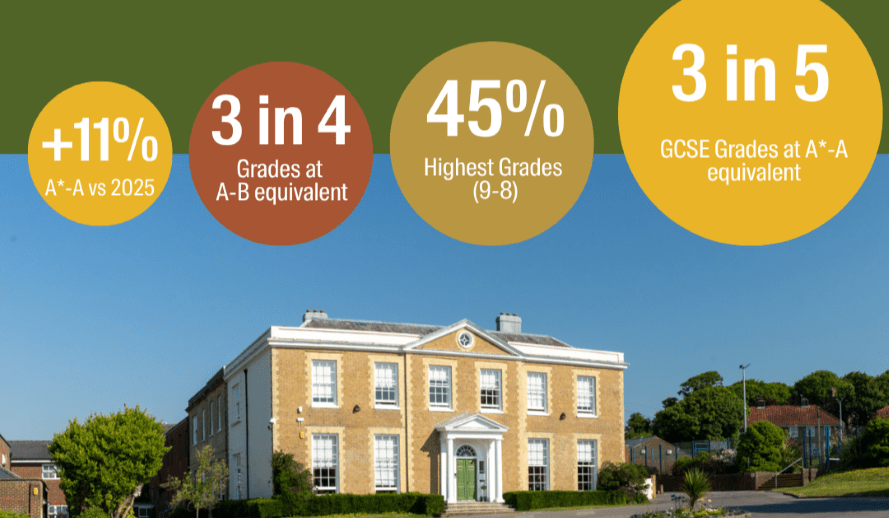
Students at Oxford International College Brighton are celebrating an exceptional set of GCSE results, with 62% of all grades awarded at A*/A equivalent level and three quarters of grades awarded at the equivalent of A*-B.
News image Blog
Starting Boarding School Near Brighton | A Practical Guide for Families
Thinking about boarding school near Brighton? This guide covers the Ovingdean campus, what to expect, a before-you-arrive checklist and what to pack for life on the Sussex coast.
News image ![OIC Brighton Students Secure Places at Cambridge and Leading Global Universities Following Outstanding A Level Success | OIC Brighton - OIC Brighton Students Secure Places at Cambridge and Leading Global Universities]() Blog
Blog
 Blog
Blog OIC Brighton Students Secure Places at Cambridge and Leading Global Universities Following Outstanding A-Level Success
With one in three students achieving three or more A/A* grades and destinations spanning the UK, Europe, North America and Asia, the Class of 2026 has demonstrated outstanding academic achievement and ambitious futures.