

.jpg?h=249&iar=0&w=374&rev=2cdc7327560f4c80b14a3bfd2be23cfa&hash=7E4E151DDFCBB0F5DCCB44342C224106)
We use cookies to improve your online experiences. To learn more and choose your cookies options, please refer to our cookie policy.

22 May, 2026
Bringing Chemistry to Life Through Microscale Electrolysis
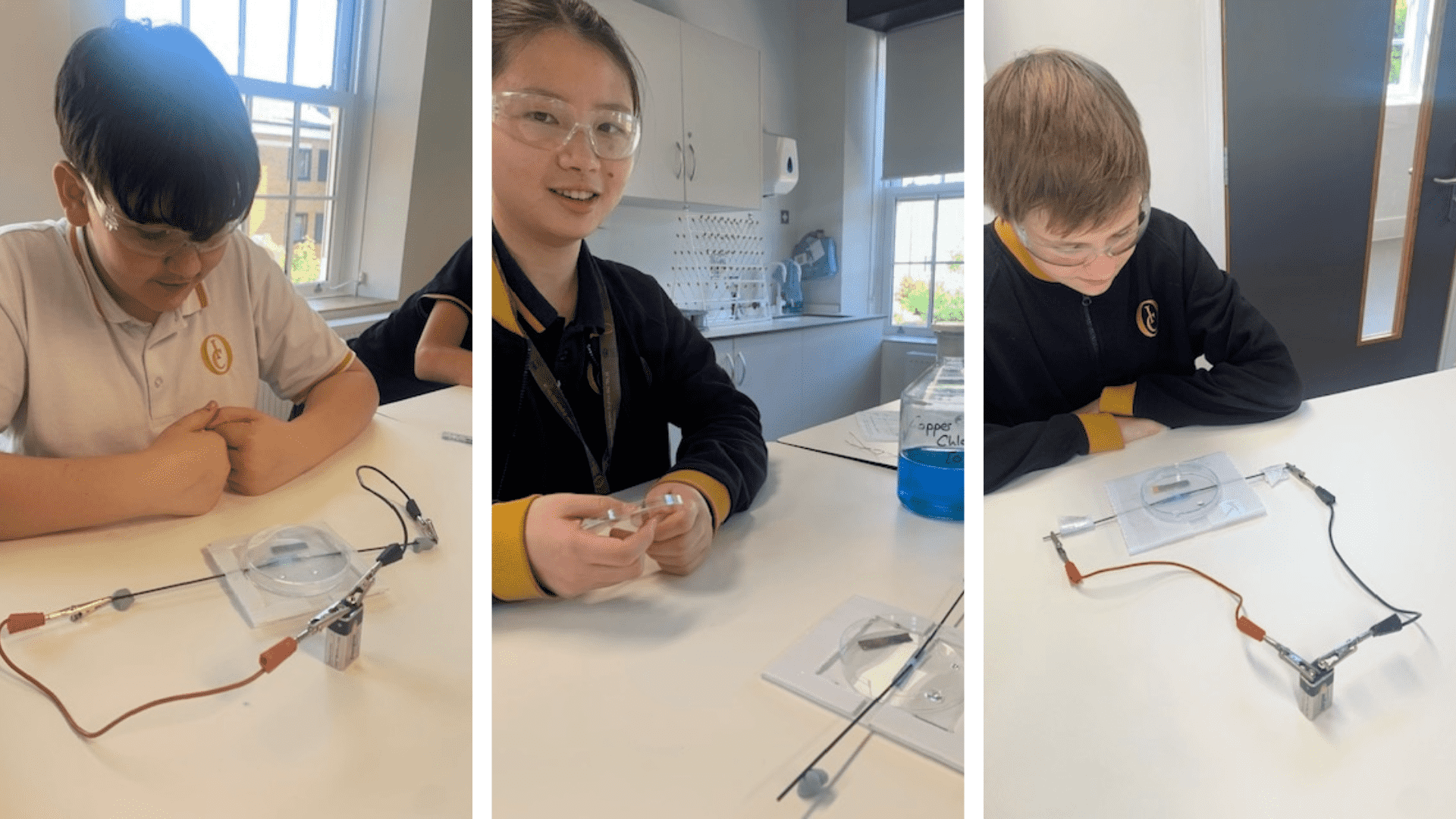
Our Year 9 Chemistry students recently took part in an engaging practical exploring the micro-electrolysis of copper (II) chloride. This hands-on investigation helped bring a key GCSE topic to life in a memorable and interactive way.
Understanding Electrolysis in Action
Electrolysis is a fundamental concept in GCSE Chemistry. It shows how electrical energy can drive chemical change and links directly to oxidation and reduction.
During the experiment, students observed copper forming at the cathode and chlorine produced at the anode. Seeing these reactions happen in real time helped reinforce their understanding of how substances break down and new products form at electrodes.
The Benefits of Microscale Experimentation
A key feature of this practical was the use of microscale techniques. Instead of large quantities of chemicals, students worked with just a few drops in a Petri dish.
This approach is becoming increasingly important in science education. It reduces chemical waste, improves safety and supports more sustainable laboratory practices, all while maintaining a high-quality learning experience.
Connecting Chemistry to the Real World
Electrolysis is not just a classroom concept. It plays a vital role in many real-world applications.
Students explored how it is used to extract metals such as aluminium, purify copper for electrical use and produce chlorine for water treatment. These examples helped show how chemistry underpins everyday life and essential global industries.
Exploring Future Technologies
The lesson also highlighted how electrolysis connects to new and emerging technologies.
Students learned about the production of hydrogen as a potential clean fuel, as well as processes like electroplating, which are widely used in industries from jewellery to automotive manufacturing. These applications demonstrated the ongoing relevance of electrolysis in a changing world.
A Meaningful Learning Experience
By combining practical investigation with real-world context, this lesson helped students see chemistry as both active and relevant.It not only reinforced key GCSE knowledge but also showed how scientific understanding can contribute to solving global challenges. Through microscale experimentation, students are developing valuable skills and a deeper appreciation of how chemistry can make a positive impact.
Related news
News image ![Why Psychology Is One of the Most Important Subjects for the Future | OIC Brighton - Why Psychology Is One of the Most Important Subjects for the Future]() Blog
Blog
 Blog
Blog Why Psychology Is One of the Most Important Subjects for the Future
We explore why Psychology remains one of the most valuable subjects for students, developing critical thinking, scientific literacy and a deeper understanding of human behaviour in a rapidly changing world.
News image ![Oxford International College Brighton Celebrates Outstanding GCSE Results - Oxford International College Brighton GCSE Results 2026]() News
News
 News
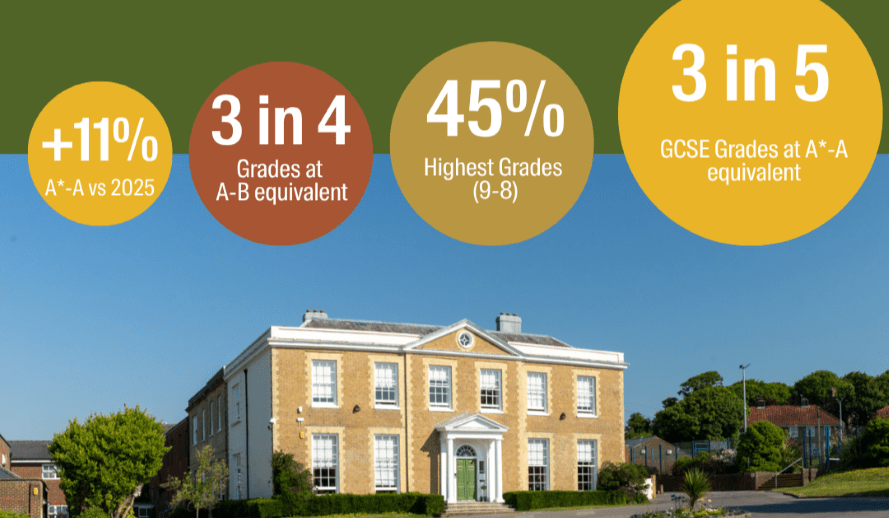
News Oxford International College Brighton Celebrates Outstanding GCSE Results 2026
Students at Oxford International College Brighton are celebrating an exceptional set of GCSE results, with 62% of all grades awarded at A*/A equivalent level and three quarters of grades awarded at the equivalent of A*-B.
News image Blog
Starting Boarding School Near Brighton | A Practical Guide for Families
Thinking about boarding school near Brighton? This guide covers the Ovingdean campus, what to expect, a before-you-arrive checklist and what to pack for life on the Sussex coast.
News image ![OIC Brighton Students Secure Places at Cambridge and Leading Global Universities Following Outstanding A Level Success | OIC Brighton - OIC Brighton Students Secure Places at Cambridge and Leading Global Universities]() Blog
Blog
 Blog
Blog OIC Brighton Students Secure Places at Cambridge and Leading Global Universities Following Outstanding A-Level Success
With one in three students achieving three or more A/A* grades and destinations spanning the UK, Europe, North America and Asia, the Class of 2026 has demonstrated outstanding academic achievement and ambitious futures.