

.jpg?h=249&iar=0&w=374&rev=2cdc7327560f4c80b14a3bfd2be23cfa&hash=7E4E151DDFCBB0F5DCCB44342C224106)
We use cookies to improve your online experiences. To learn more and choose your cookies options, please refer to our cookie policy.

18 May, 2026
From Barrister to Classroom: Why Studying Politics and History Matters More Than Ever
.jpg?h=4000&iar=0&w=6000&rev=ad4c4126d48442469ae1aff0915bb3d0&hash=F828544CCFDF1439AD96E9565C821DC1)
From the Courtroom to the Classroom
Authored by Tom Spencer, Humanities Teacher at OIC Brighton
As a former barrister turned teacher of History, Politics and Business, I often wondered whether bringing a real-world legal perspective into the classroom would truly make a difference.
At Oxford International College Brighton, I quickly discovered that it does.
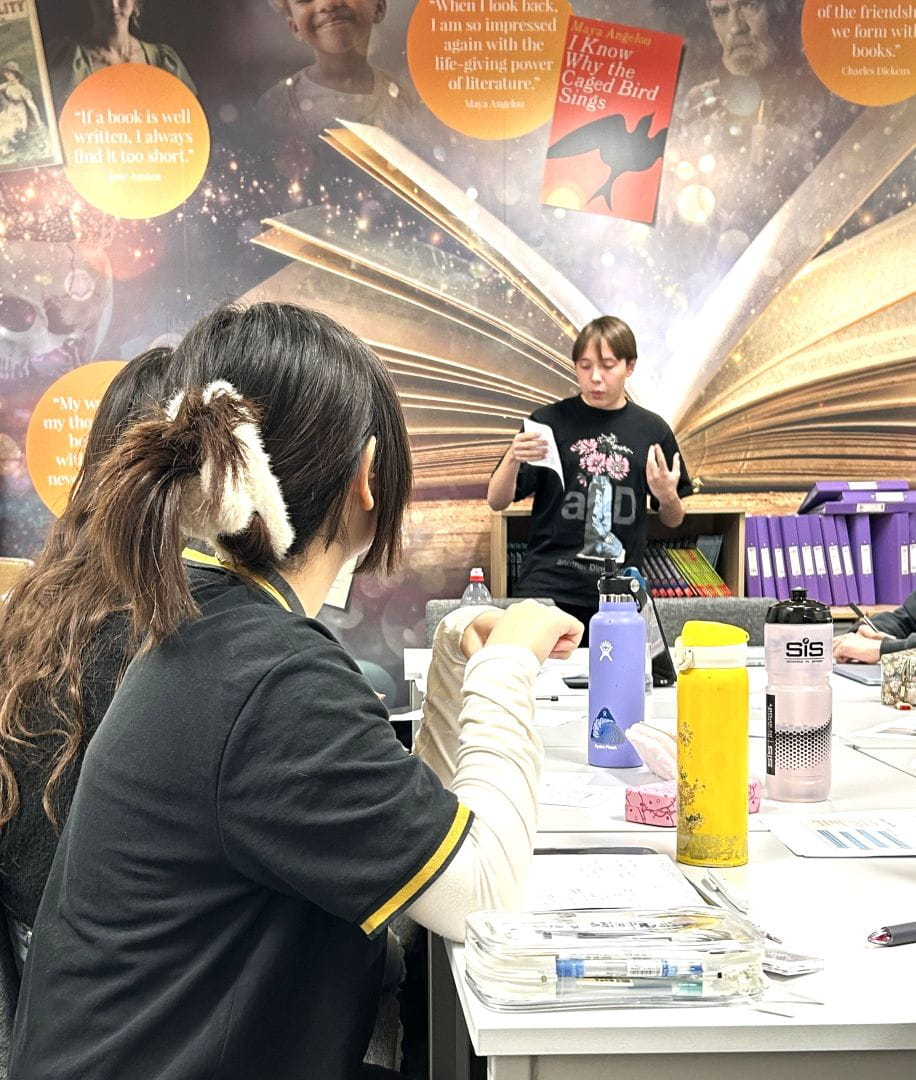
Here, students are given the freedom — in an open and informal atmosphere — to question, challenge and explore ideas deeply. Whether interrogating my previous legal career or debating contemporary political issues, their curiosity drives the learning. The result has been striking: stronger engagement, richer discussion and more confident, analytical thinkers.
At Oxford International College Brighton, I quickly discovered that it does.
Here, students are given the freedom — in an open and informal atmosphere — to question, challenge and explore ideas deeply. Whether interrogating my previous legal career or debating contemporary political issues, their curiosity drives the learning. The result has been striking: stronger engagement, richer discussion and more confident, analytical thinkers.
Why Study Politics?
I am often asked why young people should study Politics at all.
My answer is simple: politics shapes every aspect of our lives.
From the laws that govern society to the economic decisions that influence opportunity, politics is not distant or abstract — it is personal, immediate and essential. To study politics is to understand power, responsibility and citizenship.
In an age of rapid change and constant information — much of it superficial — students must develop the ability to question, analyse and evaluate critically. Studying Politics gives them not only knowledge, but the intellectual confidence to challenge ideas and form reasoned arguments.
These are not just academic skills. They are the foundations of leadership and informed participation in society.
My answer is simple: politics shapes every aspect of our lives.
From the laws that govern society to the economic decisions that influence opportunity, politics is not distant or abstract — it is personal, immediate and essential. To study politics is to understand power, responsibility and citizenship.
In an age of rapid change and constant information — much of it superficial — students must develop the ability to question, analyse and evaluate critically. Studying Politics gives them not only knowledge, but the intellectual confidence to challenge ideas and form reasoned arguments.
These are not just academic skills. They are the foundations of leadership and informed participation in society.
The Value of History: Learning From the Past
History reminds us that the future is never created in isolation.
Every political movement, economic crisis or social reform has roots in the past. By studying History, students gain perspective. They begin to recognise patterns, understand long-term consequences and appreciate the complexity of human decision-making.
History does not offer easy answers. Instead, it equips students with something more powerful: the ability to ask better questions.
For young people preparing for university and competitive careers, that intellectual maturity is invaluable.
Every political movement, economic crisis or social reform has roots in the past. By studying History, students gain perspective. They begin to recognise patterns, understand long-term consequences and appreciate the complexity of human decision-making.
History does not offer easy answers. Instead, it equips students with something more powerful: the ability to ask better questions.
For young people preparing for university and competitive careers, that intellectual maturity is invaluable.
Lessons From the Legal Profession
My years as a lawyer taught me that the strongest arguments are rarely the loudest.
A persuasive case is built on evidence, logic and the ability to anticipate opposing viewpoints. Good advocates listen carefully, think critically and communicate clearly.
These are not simply legal skills — they are life skills.
In the classroom, I encourage students to move beyond surface-level opinion and develop positions grounded in evidence and reason. The ability to construct and defend an argument thoughtfully is central to academic success and to democratic society.
These skills are further developed through our Law Society at OIC Brighton. Mooting competitions, including international opportunities, allow students to test their advocacy skills in simulated courtrooms. These experiences build confidence, intellectual agility and self-belief — and they are, importantly, great fun.
A persuasive case is built on evidence, logic and the ability to anticipate opposing viewpoints. Good advocates listen carefully, think critically and communicate clearly.
These are not simply legal skills — they are life skills.
In the classroom, I encourage students to move beyond surface-level opinion and develop positions grounded in evidence and reason. The ability to construct and defend an argument thoughtfully is central to academic success and to democratic society.
These skills are further developed through our Law Society at OIC Brighton. Mooting competitions, including international opportunities, allow students to test their advocacy skills in simulated courtrooms. These experiences build confidence, intellectual agility and self-belief — and they are, importantly, great fun.
A Culture of Curiosity and Debate
Above all, education should inspire curiosity.
A classroom should never be a place of passive acceptance, but of active discussion. When students debate ideas openly and respectfully, they learn not only about the world around them, but also about themselves.
At OIC Brighton, this culture of enquiry is embraced wholeheartedly. Students are encouraged to think independently, challenge assumptions and engage deeply with the subjects they study.
That, ultimately, is the true purpose of education.
A classroom should never be a place of passive acceptance, but of active discussion. When students debate ideas openly and respectfully, they learn not only about the world around them, but also about themselves.
At OIC Brighton, this culture of enquiry is embraced wholeheartedly. Students are encouraged to think independently, challenge assumptions and engage deeply with the subjects they study.
That, ultimately, is the true purpose of education.
Related news
News image ![Why Psychology Is One of the Most Important Subjects for the Future | OIC Brighton - Why Psychology Is One of the Most Important Subjects for the Future]() Blog
Blog
 Blog
Blog Why Psychology Is One of the Most Important Subjects for the Future
We explore why Psychology remains one of the most valuable subjects for students, developing critical thinking, scientific literacy and a deeper understanding of human behaviour in a rapidly changing world.
News image ![Oxford International College Brighton Celebrates Outstanding GCSE Results - Oxford International College Brighton GCSE Results 2026]() News
News
 News
News Oxford International College Brighton Celebrates Outstanding GCSE Results 2026
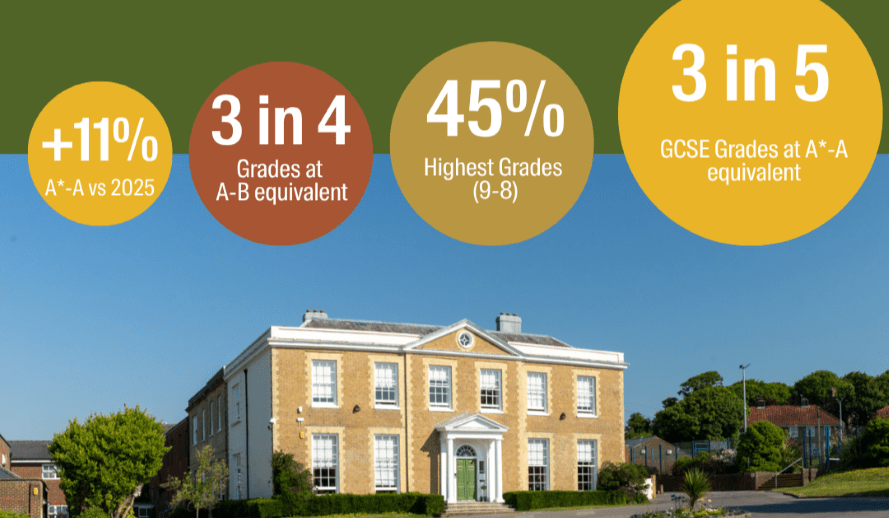
Students at Oxford International College Brighton are celebrating an exceptional set of GCSE results, with 62% of all grades awarded at A*/A equivalent level and three quarters of grades awarded at the equivalent of A*-B.
News image Blog
Starting Boarding School Near Brighton | A Practical Guide for Families
Thinking about boarding school near Brighton? This guide covers the Ovingdean campus, what to expect, a before-you-arrive checklist and what to pack for life on the Sussex coast.
News image ![OIC Brighton Students Secure Places at Cambridge and Leading Global Universities Following Outstanding A Level Success | OIC Brighton - OIC Brighton Students Secure Places at Cambridge and Leading Global Universities]() Blog
Blog
 Blog
Blog OIC Brighton Students Secure Places at Cambridge and Leading Global Universities Following Outstanding A-Level Success
With one in three students achieving three or more A/A* grades and destinations spanning the UK, Europe, North America and Asia, the Class of 2026 has demonstrated outstanding academic achievement and ambitious futures.