
.jpg?h=249&iar=0&w=374&rev=2cdc7327560f4c80b14a3bfd2be23cfa&hash=7E4E151DDFCBB0F5DCCB44342C224106)
We use cookies to improve your online experiences. To learn more and choose your cookies options, please refer to our cookie policy.

23 April, 2026
Who Are Our Students Becoming Because They Read?
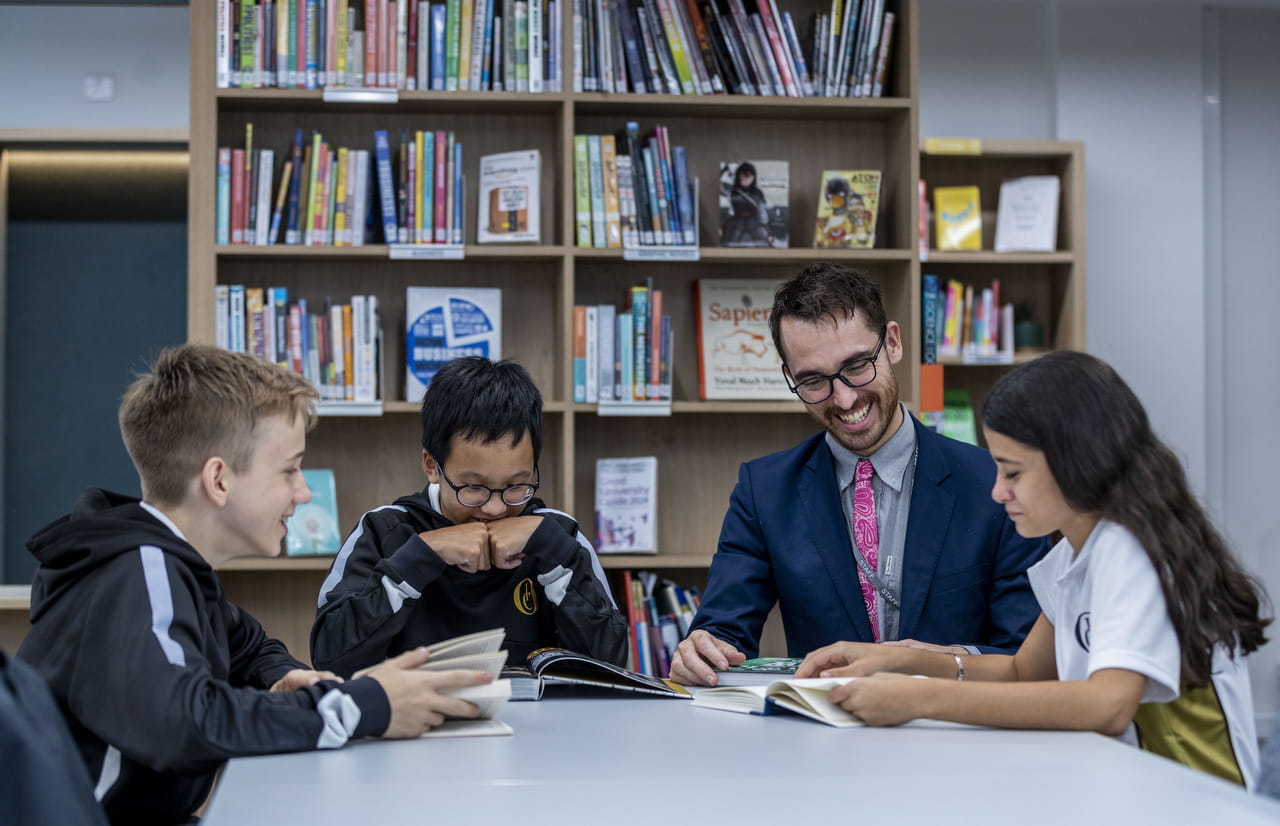
There is a moment I often notice in the classroom.
A student pauses mid-discussion. They hesitate - briefly - before offering an interpretation that challenges the dominant reading of a text. The room shifts. Others lean in. The debate begins.
That moment matters.
Because literature is not simply about understanding what an author meant. It is about developing the confidence to question, to articulate, and to think independently.
On UNESCO World Book Day, we celebrate books. But at OIC Brighton, we celebrate something deeper: the intellectual courage and global awareness that reading nurtures in young people.
This year, 90% of our students told us that their English lessons help them to explore different points of view, think hard, and develop their own voice. For me, that speaks volumes.
In an age of instant answers and digital distraction, deep reading is a discipline. It requires patience. It requires students to sit with complexity rather than rush towards certainty. It encourages them not simply to respond instinctively, but to reflect critically.
Metacognition is central to how we do this. We ask students to “Think that, stand back, push back” - to recognise their first reaction, step away from it, and then challenge it. We explore “This was then, this is now”, helping students to understand how texts shift in meaning across time and context. And we use “Messenger, Message, Sure?” to encourage thoughtful questioning of sources and authority.
These are not just techniques for examinations. They are habits of mind for life.
For some students, particularly those studying in a second language, intellectual confidence develops gradually.
Our Reading Mentors programme offers one‑to‑one sessions that provide a safe space to read aloud, make mistakes and build fluency. In doing so, students strengthen not only their technical skills, but their general knowledge and cultural literacy - foundations that support every subject.
The classroom atmosphere matters too.
A year 11 student reflects that she enjoys “feeling free to share any different opinions and thoughts about the topic in class and have a discussion with teachers during lesson.” A Year 10 student values “the fact that I can ask as many questions as I want.”
This openness is intentional. We believe that lively debate, discussion and an underlying belief in a young person’s ability to achieve are central to curriculum design.
Through coursework, students are encouraged to engage deeply with multiple texts and perspectives. As another Year 10 student shared, exploring three texts in her coursework not only improved her analytical skills but exposed her to different viewpoints and styles of writing from different time periods.
Even the smallest moments of close reading can spark transformation. A Year 11 student described how annotating poetry revealed layers of meaning she had not initially seen - how “when you start to dissect them, you realise there is so much more thought out into each sentence than it originally seems.”
That realisation - that texts hold depth beneath the surface - often mirrors a student’s discovery of their own depth as a thinker.
Our approach is intentionally cross‑curricular. Through national events such as National Poetry Day and Black History Month, students explore how the written and spoken word captures both the finest detail and the most complex emotion. These experiences build empathy, self‑knowledge and a thoughtful engagement with values in the real world.
In a diverse college community like ours - strengthened further by our connection to Nord Anglia Education’s global network - literature becomes a meeting point of cultures. Students bring perspectives shaped by different histories and lived experiences. A single text can generate multiple interpretations, each enriched by authentic context.
Reading, then, is not simply preparation for A Levels.
It is preparation for university interviews, for global conversations, for leadership in medicine, law, business, science and beyond. Leading universities look for students who can think critically, communicate precisely and evaluate evidence with maturity.
Books expand vocabulary. But more importantly, they expand perspective.
On UNESCO World Book Day, we are reminded that stories connect us across borders and across generations. They help young people understand lives lived near and far - geographically, historically and politically.
So perhaps the most important question is not simply “What are our students reading?”
It is:
Who are they becoming because they read?
At OIC Brighton, that journey of becoming sits at the heart of everything we do.
A student pauses mid-discussion. They hesitate - briefly - before offering an interpretation that challenges the dominant reading of a text. The room shifts. Others lean in. The debate begins.
That moment matters.
Because literature is not simply about understanding what an author meant. It is about developing the confidence to question, to articulate, and to think independently.
On UNESCO World Book Day, we celebrate books. But at OIC Brighton, we celebrate something deeper: the intellectual courage and global awareness that reading nurtures in young people.
This year, 90% of our students told us that their English lessons help them to explore different points of view, think hard, and develop their own voice. For me, that speaks volumes.
In an age of instant answers and digital distraction, deep reading is a discipline. It requires patience. It requires students to sit with complexity rather than rush towards certainty. It encourages them not simply to respond instinctively, but to reflect critically.
Metacognition is central to how we do this. We ask students to “Think that, stand back, push back” - to recognise their first reaction, step away from it, and then challenge it. We explore “This was then, this is now”, helping students to understand how texts shift in meaning across time and context. And we use “Messenger, Message, Sure?” to encourage thoughtful questioning of sources and authority.
These are not just techniques for examinations. They are habits of mind for life.
For some students, particularly those studying in a second language, intellectual confidence develops gradually.
Our Reading Mentors programme offers one‑to‑one sessions that provide a safe space to read aloud, make mistakes and build fluency. In doing so, students strengthen not only their technical skills, but their general knowledge and cultural literacy - foundations that support every subject.
The classroom atmosphere matters too.
A year 11 student reflects that she enjoys “feeling free to share any different opinions and thoughts about the topic in class and have a discussion with teachers during lesson.” A Year 10 student values “the fact that I can ask as many questions as I want.”
This openness is intentional. We believe that lively debate, discussion and an underlying belief in a young person’s ability to achieve are central to curriculum design.
Through coursework, students are encouraged to engage deeply with multiple texts and perspectives. As another Year 10 student shared, exploring three texts in her coursework not only improved her analytical skills but exposed her to different viewpoints and styles of writing from different time periods.
Even the smallest moments of close reading can spark transformation. A Year 11 student described how annotating poetry revealed layers of meaning she had not initially seen - how “when you start to dissect them, you realise there is so much more thought out into each sentence than it originally seems.”
That realisation - that texts hold depth beneath the surface - often mirrors a student’s discovery of their own depth as a thinker.
Our approach is intentionally cross‑curricular. Through national events such as National Poetry Day and Black History Month, students explore how the written and spoken word captures both the finest detail and the most complex emotion. These experiences build empathy, self‑knowledge and a thoughtful engagement with values in the real world.
In a diverse college community like ours - strengthened further by our connection to Nord Anglia Education’s global network - literature becomes a meeting point of cultures. Students bring perspectives shaped by different histories and lived experiences. A single text can generate multiple interpretations, each enriched by authentic context.
Reading, then, is not simply preparation for A Levels.
It is preparation for university interviews, for global conversations, for leadership in medicine, law, business, science and beyond. Leading universities look for students who can think critically, communicate precisely and evaluate evidence with maturity.
Books expand vocabulary. But more importantly, they expand perspective.
On UNESCO World Book Day, we are reminded that stories connect us across borders and across generations. They help young people understand lives lived near and far - geographically, historically and politically.
So perhaps the most important question is not simply “What are our students reading?”
It is:
Who are they becoming because they read?
At OIC Brighton, that journey of becoming sits at the heart of everything we do.
Related news
News image ![Why Psychology Is One of the Most Important Subjects for the Future | OIC Brighton - Why Psychology Is One of the Most Important Subjects for the Future]() Blog
Blog
 Blog
Blog Why Psychology Is One of the Most Important Subjects for the Future
We explore why Psychology remains one of the most valuable subjects for students, developing critical thinking, scientific literacy and a deeper understanding of human behaviour in a rapidly changing world.
News image ![Oxford International College Brighton Celebrates Outstanding GCSE Results - Oxford International College Brighton GCSE Results 2026]() News
News
 News
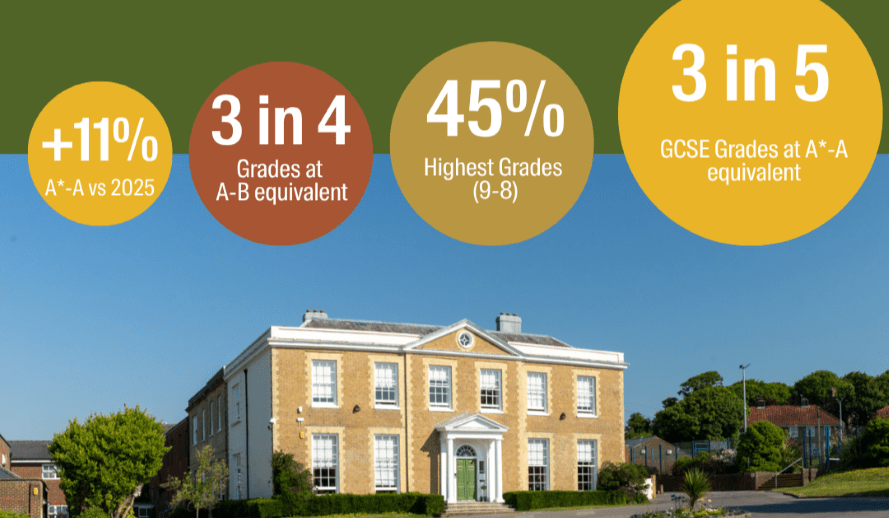
News Oxford International College Brighton Celebrates Outstanding GCSE Results 2026
Students at Oxford International College Brighton are celebrating an exceptional set of GCSE results, with 62% of all grades awarded at A*/A equivalent level and three quarters of grades awarded at the equivalent of A*-B.
News image Blog
Starting Boarding School Near Brighton | A Practical Guide for Families
Thinking about boarding school near Brighton? This guide covers the Ovingdean campus, what to expect, a before-you-arrive checklist and what to pack for life on the Sussex coast.
News image ![OIC Brighton Students Secure Places at Cambridge and Leading Global Universities Following Outstanding A Level Success | OIC Brighton - OIC Brighton Students Secure Places at Cambridge and Leading Global Universities]() Blog
Blog
 Blog
Blog OIC Brighton Students Secure Places at Cambridge and Leading Global Universities Following Outstanding A-Level Success
With one in three students achieving three or more A/A* grades and destinations spanning the UK, Europe, North America and Asia, the Class of 2026 has demonstrated outstanding academic achievement and ambitious futures.